Dishwasher Leaving White Residue? What Causes the White Film
2026-05-21
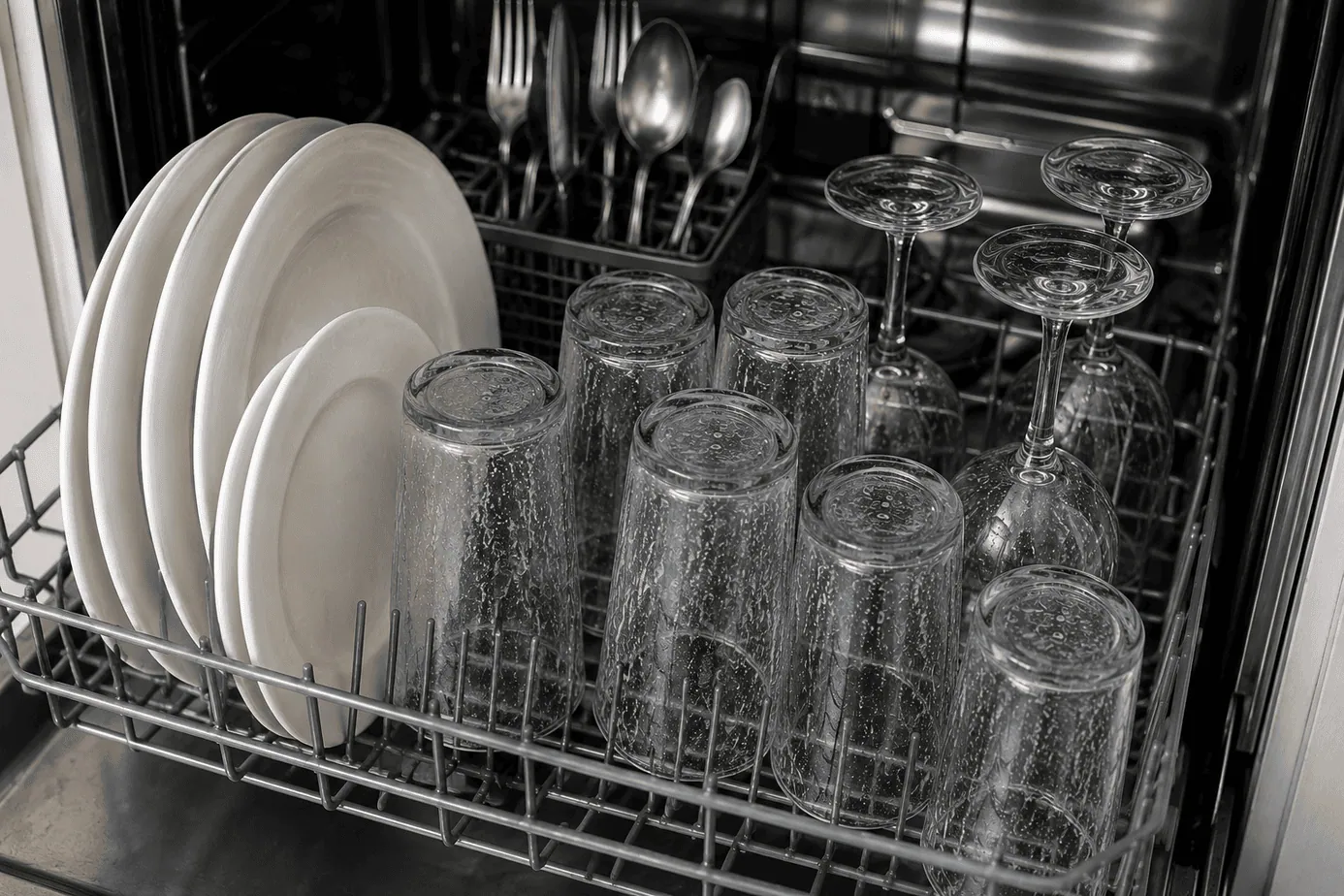
A dishwasher leaving white residue is a common complaint that can leave glasses cloudy, dishes gritty, and silverware looking dull after a wash cycle. While the film is often linked to hard water or detergent issues, several dishwasher problems can also contribute to residue buildup over time.
Understanding what causes the white film can help prevent damage to dishes and improve cleaning performance.
Common Causes of a Dishwasher Leaving White Residue
A dishwasher should leave dishes clean and clear, so a chalky white coating is usually a sign that something in the wash process is not working correctly.
In many homes, the issue develops gradually and becomes more noticeable on glassware, dark dishes, and stainless steel items.
Below are some of the most common reasons a dishwasher leaving white residue becomes an ongoing problem.
Hard Water Mineral Buildup
Hard water is one of the leading causes of white residue inside a dishwasher. Minerals like calcium and magnesium remain behind after water evaporates, leaving a cloudy or chalky film on dishes.
Common signs include:
- White spots on glasses and silverware
- Chalky buildup inside the dishwasher tub
- Dishes that feel gritty after washing
- Film that becomes worse after heated drying cycles
Homes with hard water often benefit from rinse aid and detergent adjustments. If mineral buildup continues, professional service may be needed to inspect components affected by scaling inside the appliance.
Too Much Detergent
Using excessive detergent can leave soap residue behind, especially when combined with hard water. Modern dishwashers are designed to work with smaller amounts of detergent than many homeowners realize.
Signs of excess detergent include:
- Powdery residue on dishes
- Soap buildup along the dishwasher door
- Cloudy glasses after every cycle
- A slippery or filmy texture on cookware
Reducing detergent use may improve performance, but persistent residue can also point to circulation or drainage problems that should be professionally evaluated.
Low Water Temperature
Dishwashers rely on hot water to dissolve detergent properly and rinse minerals away from dishes. If the incoming water temperature is too low, detergent may not fully dissolve during the cycle.
Possible symptoms include:
- White streaks on plates and bowls
- Undissolved detergent remaining in the dispenser
- Greasy residue mixed with cloudy film
- Poor overall cleaning results
Water heating issues may stem from the household water heater or from dishwasher heating components that are not operating correctly. A technician can determine whether the appliance is reaching proper wash temperatures.
Clogged Spray Arms
Spray arms distribute water throughout the dishwasher during the cycle. When food particles or mineral deposits block the spray holes, water flow becomes uneven and dishes may not rinse properly.
Watch for these signs:
- Residue concentrated on the top or bottom rack
- Certain dishes repeatedly coming out dirty
- Weak water circulation sounds
- Food debris left behind after a cycle
Cleaning visible debris from spray arm openings may help improve performance. If buildup continues or water pressure seems weak, professional dishwasher service may be necessary to inspect circulation components.

A Failing Water Softener System
Some dishwashers include built-in water softening systems or are connected to a whole-home softener. If the system stops working correctly, mineral residue can quickly begin appearing on dishes again.
You may notice:
- Sudden increase in white film
- Cloudiness despite using rinse aid
- Mineral buildup inside the tub
- Spots that worsen over time
A professional can inspect the dishwasher and determine whether the softening system or water supply conditions are contributing to the issue.
Rinse Aid Problems
Rinse aid helps water sheet off dishes during the final rinse cycle. Without it, minerals and detergent residue are more likely to remain behind after drying.
Signs of rinse aid issues include:
- Water spots on glassware
- White haze after heated drying
- Streaks on stainless steel items
- Dishes that never look fully clean
If adjusting rinse aid settings does not improve results, the dispenser itself may need professional attention.
Drainage Problems
A dishwasher that cannot drain properly may leave dirty water and detergent residue circulating during the rinse cycle. This can create a cloudy white coating on dishes and interior surfaces.
Symptoms often include:
- Standing water at the bottom of the dishwasher
- Musty odors
- Residue combined with food particles
- Slower cycle performance
Because drainage systems involve pumps and internal components, persistent drainage issues should be inspected by a qualified technician.
Helpful Troubleshooting Tips for White Residue
There are a few simple maintenance habits that may help reduce dishwasher residue and improve cleaning performance.
- Use the correct detergent amount for your water conditions
- Refill rinse aid regularly
- Run hot water at the sink before starting the dishwasher
- Clean visible food debris from the filter area
- Wipe mineral buildup from interior surfaces
- Avoid overcrowding dishes during cycles
If your dishwasher leaving white residue continues despite these adjustments, the appliance may need professional diagnosis to identify heating, circulation, or drainage problems affecting wash performance.
Learn about common dishwasher drying problems if your dishes are also coming out wet, cloudy, or streaked after a cycle.
When Dishwasher Leaving White Residue Can Point to Larger Dishwasher Problems
While some residue issues are related to detergent or water quality, recurring white film can also signal problems with dishwasher components.
If dishes consistently come out cloudy or gritty, professional service can help prevent added strain on the appliance and improve washing performance. The experienced St. Peters dishwasher repair professionals at Mid America Appliance Repair can diagnose the cause of dishwasher residue and recommend the appropriate repair solution.